
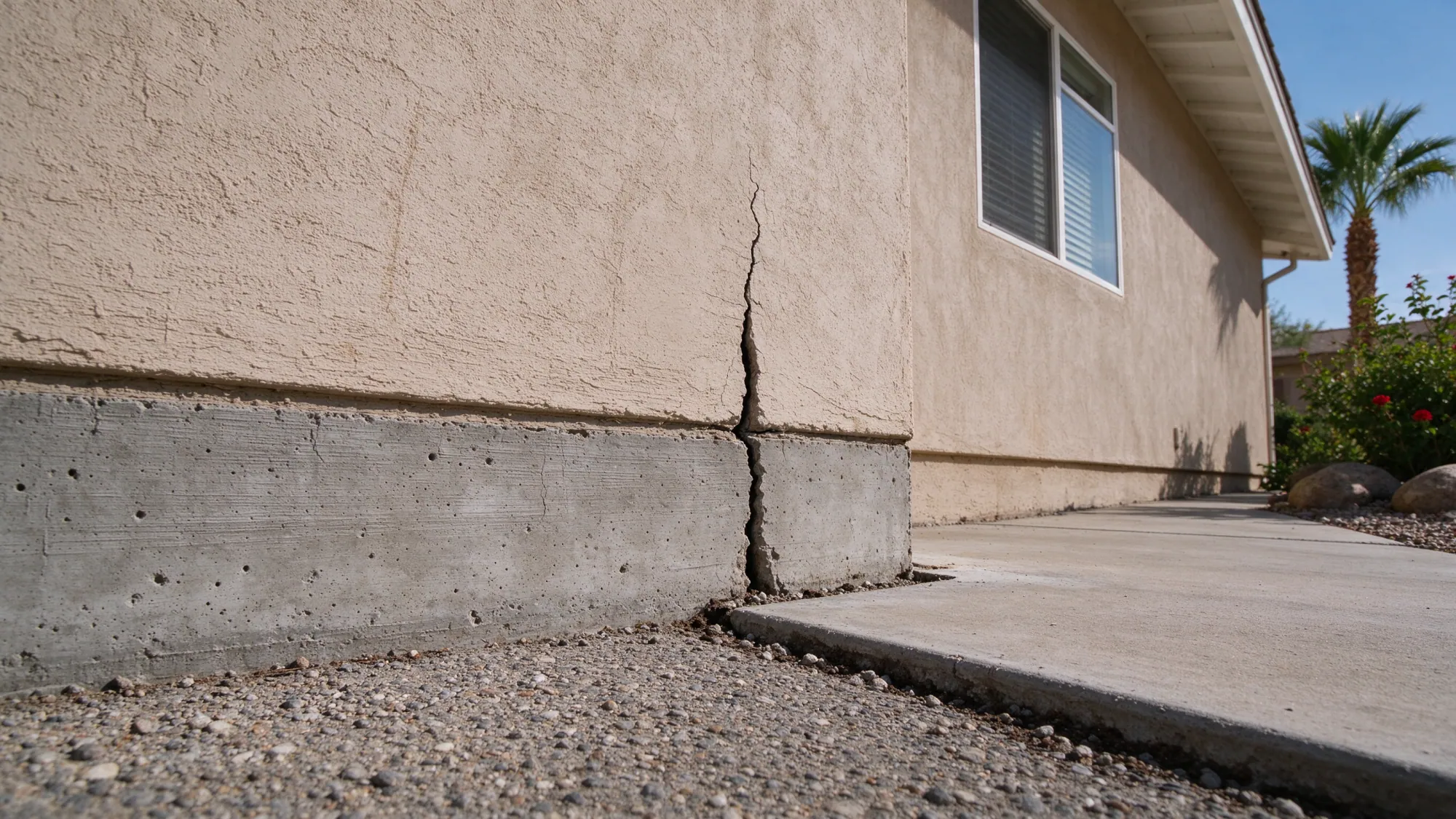
Water can change the volume or support behavior of susceptible ground and can contribute to deterioration under relevant conditions. Leaks and concentrated runoff therefore belong in a foundation investigation, but their presence does not establish causation. The assessment must connect the water source, affected material and building movement before selecting a repair.
Valley Foundation Repair offers and manages residential and commercial foundation repair in North Las Vegas, fulfilled by licensed and insured contractors. Water-related questions are considered alongside the building’s support, with the appropriate plumbing, geotechnical or structural role defined when needed.
Why can the same water exposure lead to different movement?
The ground’s response depends on its properties and condition. Some susceptible soils can lose volume when wetted under load; others can expand. Water can also be involved in loss of supporting material or chemical effects that require a different investigation. A wet area beside a crack does not distinguish among those mechanisms.
The foundation system affects how a change reaches the building. A separate interior slab may respond differently from perimeter footings. Differential movement can strain the construction above even when only part of the support changes. Establish which element moved before choosing a repair based on the appearance of the floor or wall finish.
The settlement versus heave guide explains why movement direction matters. Calling every water-related problem settlement can lead to an inappropriate lifting or support proposal. The explanation should fit the measured pattern and actual ground information, including observations that remain uncertain.
What can a buried service-line leak leave hidden?
North Las Vegas water guidance explains that porous soils can delay a service-line leak appearing at the surface. A dry yard therefore does not establish that a buried line is intact. A suspected leak needs investigation through the appropriate utility or plumbing scope, rather than being ruled out solely from what the landscaping looks like.
Responsibility for the affected line needs confirmation. The city’s guidance identifies customer responsibility downstream of the meter within its service context, but utility territory and the actual line involved must still be established for the property. Do not assume a Las Vegas mailing address identifies the water provider or the party responsible for every buried pipe.
Finding a leak does not finish the structural assessment. Ask where the water traveled, what material was exposed and whether that information fits the timing and location of movement. Plumbing repair identifies and addresses the source; geotechnical and structural work address the consequences within their own defined scopes.
How do grading, runoff and roof discharge enter the investigation?
Ground grading can direct runoff toward or away from a building. Changes to paving, planters or adjoining surfaces may alter where water collects. Water collected near a footing can change the moisture exposure of susceptible supporting soil, with the effect depending on that material. Record the route from a safe location during relevant conditions, without walking into standing water or opening utilities to investigate it. A photograph of the route can help define the drainage question.
Where gutters and downspouts exist, blocked or ineffective discharge paths can concentrate water at one location. The existence of a gutter is not proof that water reaches a suitable destination. The assessment should consider the actual route and the condition near the affected foundation instead of assuming the roof system is functioning from its appearance alone.
These observations can inform a drainage inspection and a moisture-cause investigation. They do not turn foundation repair into a standalone drainage offering. A proposed structural scope should identify any separate source correction it depends on and who is responsible for that work before support construction begins.
Define the next step for your property.
Share the property location, what you have noticed and any existing reports. Start with the concern so the assessment can be defined.
(725) 999-4951What about water pressure against a wall?
Where a wall retains wet ground, water pressure can be relevant to the lateral forces acting on it. That lateral pressure can contribute to inward deflection when the wall and its connections cannot accommodate the loading. Wall distress then raises questions about retained soil, drainage and the actual wall assembly. This mechanism should be considered only where the actual construction and exposure support it, rather than assumed from a generic foundation crack.
A below-grade wall and a slab-on-grade footing present different assessment questions. The presence of a wet surface does not establish hydrostatic loading, and an exterior crack does not prove an underground wall is bowing. Identify the element being examined before selecting a water-control or structural method.
Waterproofing intended to limit water entry addresses a different objective from restoring structural capacity. A coating or membrane does not by itself provide a new load path or repair an inadequate connection. This distinction explains the interface between scopes; it does not add basement waterproofing or drainage installation to the offered foundation services.
Can irrigation or landscaping establish the cause?
Irrigation changes and planting history may be relevant to soil-moisture questions, but they should be recorded as observations rather than assigned blame. A nearby tree does not establish a root-related cause, and a recently changed watering schedule does not prove that a crack formed because of it. The assessment needs evidence connecting the exposure to the affected support.
Different moisture and temperature mechanisms also exist in other construction and climates. Frost-related ground movement, for example, is a separate mechanism that should not be assumed to explain a North Las Vegas property. Local conditions and professional findings control the investigation; a general list of possible causes is not a regional prevalence claim.
Avoid changing the ground aggressively in an attempt to reverse a suspected cause. Flooding, digging beside a footing or deliberately drying an area can introduce a different support question. Source correction and any soil-related recommendations should be coordinated with the structural plan instead of being improvised before the mechanism is established.
Why do water correction and stabilization sometimes need separate work?
Stopping a leak or redirecting runoff can reduce further exposure. It does not necessarily replace material already lost, recover soil volume or restore damaged concrete and reinforcing. The building may still need a defined support or reconstruction scope even after the water source is repaired.
The reverse is equally important. Installing support does not repair a leaking pipe or prevent concentrated discharge from continuing. If the proposed structural work depends on a source being corrected, identify that prerequisite and its completion record. Coordination avoids one contractor assuming another scope has already been handled.
The caliche and collapsible soils guide explains why ground conditions can complicate that relationship. Hard material at one location does not establish the behavior of the soil receiving the water elsewhere. The investigation should connect the relevant ground information to the actual foundation rather than treating the whole site as uniform.
What records make the next assessment more useful?
Gather photographs of the visible building concern, dated leak or plumbing repair documents and any available soils or grading information. Note irrigation or paving changes with dates when known. Keep confirmed observations separate from explanations that have not been established, especially when the first discovery of a crack followed an unrelated event.
The initial review considers symptoms and access, then defines the need for measurements or independent professional investigation. A foundation settlement repair proposal should explain which movement it addresses and how its method fits the findings. It should also identify permits where required, access and restoration limits, plus any source correction outside the structural scope.
For the specific hidden-leak question, consult the North Las Vegas water-leak guidance. Use it to identify a sensible investigation path, while keeping the foundation conclusion dependent on the evidence at the property.