
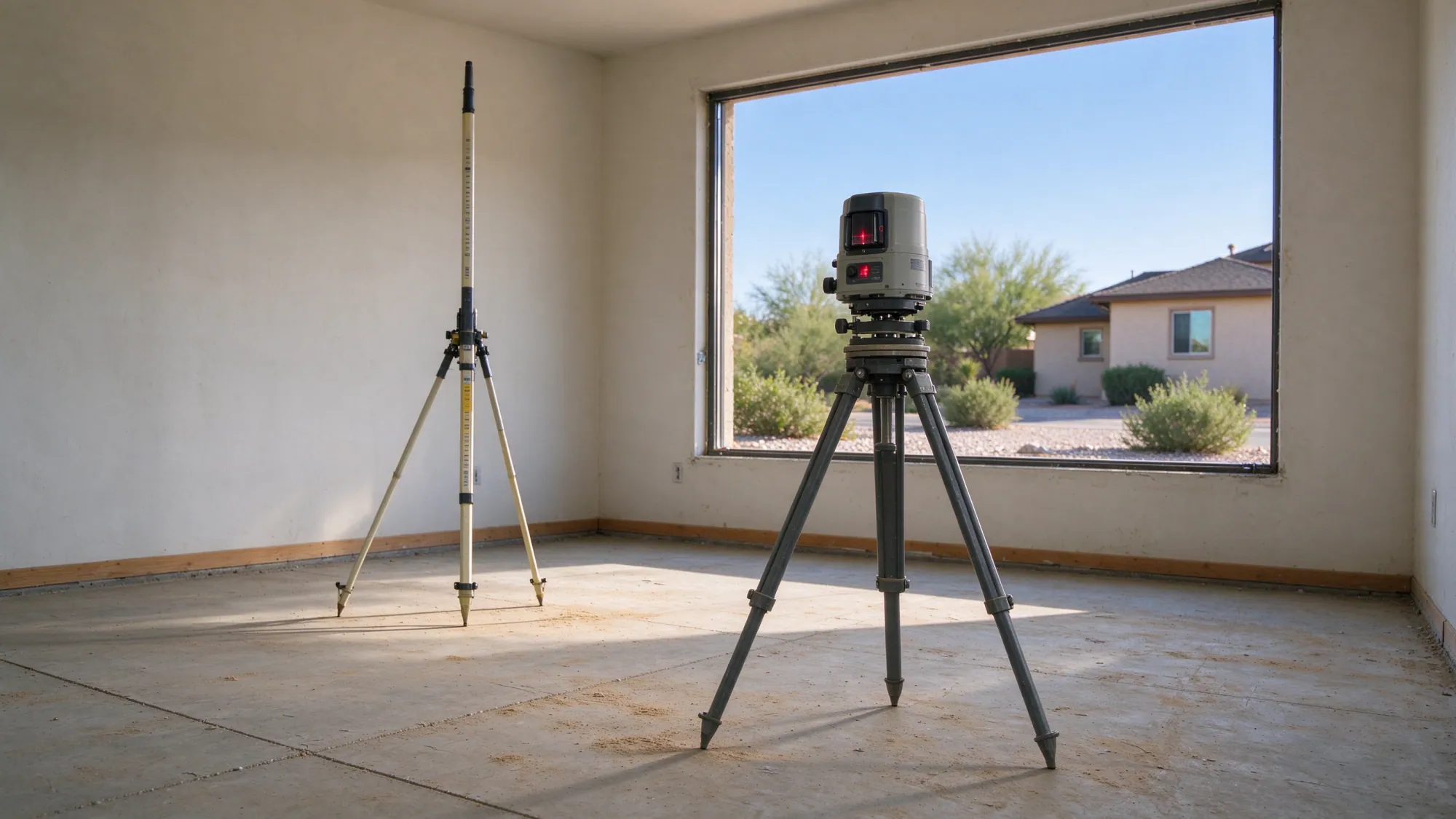
After heavy rain, document where water collected and what changed around the building without entering an unsafe area or disturbing its support. A puddle, crack or sticking door does not identify the cause by itself. The useful record connects the weather, the drainage path and the building condition over time.
Valley Foundation Repair offers and manages residential and commercial foundation repair in North Las Vegas and nearby areas, fulfilled by licensed and insured contractors. An assessment can define whether the concern needs structural investigation, a separate water-source investigation or both. It should not begin with the assumption that every post-storm observation calls for underpinning.
Start with the route the water took
From a safe, accessible position, photograph runoff paths and areas where water remains. Include enough of the setting to show the relationship between the wet ground, paving and building edge. A close-up of mud does not show whether water arrived from a roof outlet, a low point in the yard or an adjoining surface.
Note whether the concern appeared during rainfall or remained afterward. Keep the timing factual. “The area beside the patio was wet the next morning” is useful evidence; “the storm washed out the footing” is a conclusion that photographs alone cannot establish. Do not excavate beside a foundation to check what happened underneath it.
Poor grading or a changed runoff path can concentrate water near a building. Correcting that path may reduce repeated wetting. It does not automatically restore ground that has already changed volume or repair a damaged structural connection. The relationship between water and foundation movement needs to be considered alongside the visible drainage condition.
Record the building before covering the evidence
If you notice a crack, photograph its location and the surrounding wall or floor. Record when you first saw it and whether an older photograph shows the same feature. Discovering a crack after rain does not prove it formed during that storm. Furniture, floor coverings and changing light can reveal something that was already present.
An uneven floor also needs context. One part may have settled, another may have heaved, or the original construction may have included a difference in elevation. A single observation cannot distinguish these possibilities. An elevation survey can describe the current shape, while repeat measurements may help evaluate change when they use a consistent reference.
Avoid testing a concern by forcing a door, removing finishes or putting weight on an affected area. The assessment should define any measurements or intrusive work needed. If there is falling material, a sudden major change or an apparent loss of support, avoid the affected area and seek appropriate urgent help rather than collecting more photographs there.
Separate rainfall from a possible plumbing source
A wet area may have more than one explanation. Irrigation, a buried supply line and runoff can produce different patterns, and water at the surface does not identify its source. Equally, a dry surface does not rule out concealed water. Document available plumbing history and recent changes without treating them as proven causes.
The party investigating a leak answers a different question from the professional evaluating structural movement. Repairing the water line may stop further wetting, while the building’s support still needs assessment. A structural repair may address load transfer while leaving the water source untouched. A coordinated proposal assigns responsibility for each part.
For commercial property, note affected entrances, delivery areas and occupied spaces. The location of standing water can matter to access planning even before its structural significance is known. Keep normal operations separate from a promise that every area will remain usable during investigation or repair.
Make the next assessment specific
Gather the photographs, dates and any previous reports in one place. Include the property address so the permit authority and relevant site records can be confirmed. Note prior grading, plumbing or foundation work if you know about it, but distinguish records from recollection.
The foundation assessment service starts with visible symptoms, available records and access. The next step may be an independent structural opinion or soils investigation when the questions require it. Ask what each proposed investigation can establish and which finding would change the repair recommendation.
Before accepting construction, compare the cause being addressed with the actual method. Crack injection, foundation support and treatment beneath a separate floor are different scopes. The guide to comparing repair quotes explains how to check those boundaries. A useful post-rain decision is a defined investigation or repair, supported by the observations, rather than a purchase based only on the fact that a storm occurred.